
No weigh-in at your first visit.
The first conversation is just that — a conversation.
Accepting new clients — 3–5 day wait
Recovery isn't about the food.It's about what the food took from you.
Specialist treatment for anorexia, bulimia, ARFID, and binge eating — from a team who understands the silence around every meal.
Completely confidential. We will never contact your employer or GP without your explicit consent.

The first call is twenty minutes. Nothing more is asked of you.
You don't need to have the words ready. You don't need to have decided anything. A member of our intake team — not a receptionist, a clinician — picks up. They'll ask your name, ask what's been hard, and tell you what happens next. That's it. You can end the call at any point.
We hear this a lot:
"Will I be weighed or assessed immediately?"
No. The first call is a conversation. No clinical assessment happens until you choose to come in — and even then, we ask before we do anything.

An assessment that listens more than it measures.
Your first appointment is two hours. Not because we're thorough in a clinical, clipboard way — but because understanding you takes time. We'll talk about your history, your relationship with food, your body, and the world around it. Medical checks happen only with your consent, explained fully, never rushed.
We hear this a lot:
"Will you make me talk about things I'm not ready for?"
You lead the pace. We follow. There are no mandatory topics in a first assessment. Some people talk for two hours. Some people are mostly quiet, and that's fine too.

Real people, not a department. You choose who stays.
Your care team is built around you — not a protocol. You'll meet a dietitian who won't give you a meal plan until you're ready for one. A therapist whose first job is to earn your trust. A psychiatrist if medication feels right, never as a first resort. You can change any member of your team at any time.
We hear this a lot:
"What if I don't connect with my therapist?"
Tell us. We mean it. We have a team of practitioners and matching matters. No one here takes it personally — we want the fit to be right.

Therapy that speaks in your language, not in acronyms.
"The first time my therapist asked me what hunger actually felt like — not what number I was at, but what it felt like in my chest — I cried for twenty minutes. I didn't know anyone had ever thought to ask that." We use evidence-based approaches including CBT-E, ACT, and family-based therapy — but you'll experience them as conversations, not techniques.
We hear this a lot:
"Will you make me eat things I'm not ready for?"
No. Nutritional work is collaborative and paced entirely by you. Exposure happens when you feel ready — and 'ready' doesn't mean comfortable, it means willing. We'll know the difference.

Recovery looks like ordinary moments becoming possible again.
"I said yes to my friend's birthday dinner. I didn't eat much. But I was there." Recovery isn't a destination — it's a slow accumulation of small freedoms. A lunch eaten outside. A family meal without leaving early. A spontaneous yes to something that used to feel impossible. We stay with you through every one.
We hear this a lot:
"What does recovered actually mean?"
It means food takes up less of your mind. That the calculation quiets. That you can be in a room with people you love and actually be there. It looks different for everyone — and we help you define what it means for you.
Your care team
People who chose this work for a reason.
Everyone at Nourish has personal or professional experience with eating disorders. We don't approach this from a textbook.
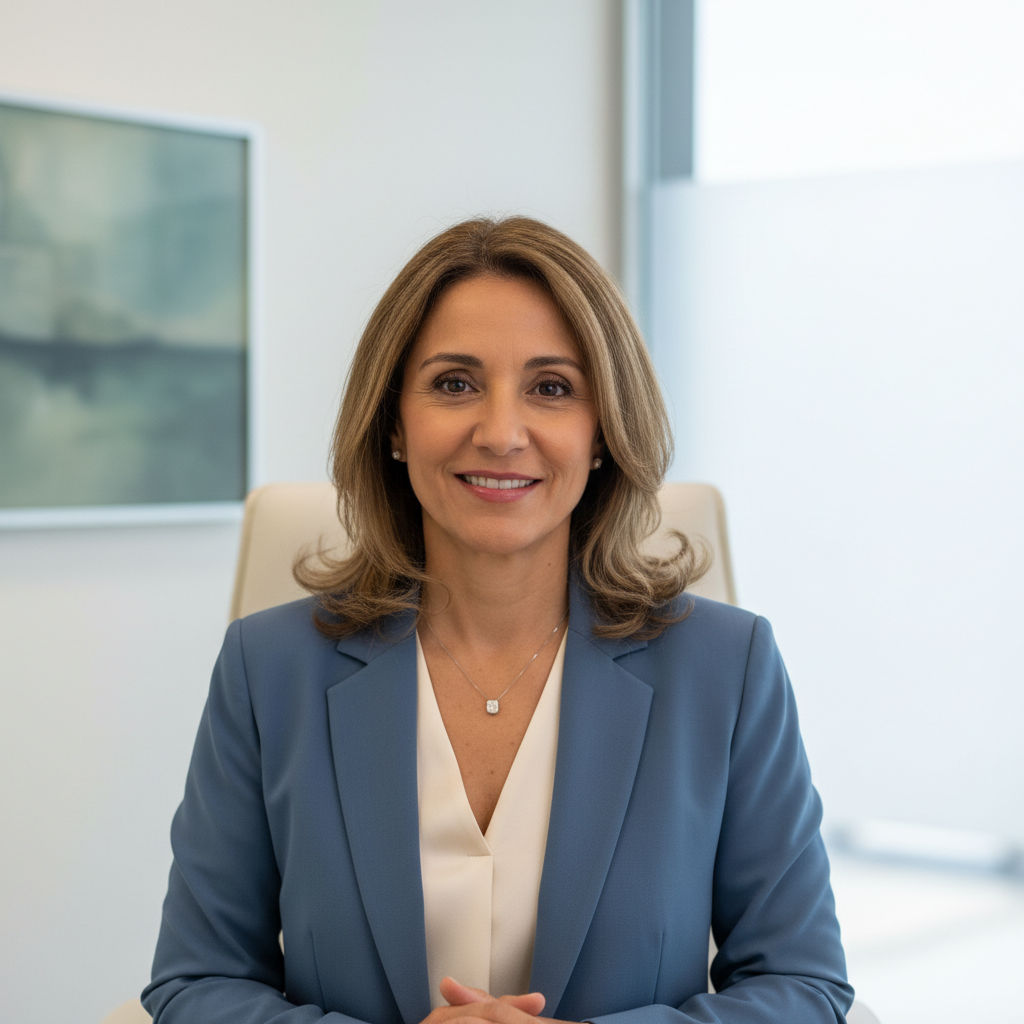
Dr. Mara Okonkwo
Lead Psychiatrist
"Medication, when it helps, should feel like finally being able to hear yourself think — not like being muffled."

James Whitfield
Specialist Dietitian
"I've never once given someone a meal plan in the first session. Trust comes before targets, always."

Priya Subramaniam
Psychotherapist, CBT-E
"I don't ask clients to challenge their thoughts. I ask them to get curious about where they came from."
In their words
The people who sat down at the table.
I'd cancelled every lunch invitation for two years. My therapist here never once made me feel ashamed of that. We just worked backward together — slowly, on my terms.
Rachel T.
In recovery for restrictive eating, 18 months with Nourish
My daughter's pediatrician told us to 'just make her eat.' Nourish was the first team that understood why that sentence was the problem, not the solution.
David & Karen M.
Parents of a client with ARFID
I'd white-knuckled through thirty years. I thought I was too old to get better. My dietitian said, 'The length of time doesn't change what's possible.' I think about that every day.
Patricia L.
Adult client, recovery from long-term anorexia
The intake call lasted 22 minutes. By the end of it I was crying — not from fear, but because someone had finally asked the right questions.
James O.
Young professional, binge eating recovery
I found Nourish after finding my son's browser history full of calorie calculators. They guided me through what to say before I'd even called for him.
Michelle W.
Parent, used the family guide before first contact
The first birthday dinner I attended after starting treatment — I didn't eat much, but I stayed. I was actually there. That was everything.
Sofia R.
Client, bulimia recovery
You found this page because you love someone who is struggling.
You may not be ready to call on their behalf. You may not know what to say to them. That's exactly why we wrote this guide — for the 2am searches, the careful dinners, the moments you don't know whether to speak or stay quiet.
The guide covers:
What to say when you're scared of saying the wrong thing
How to talk about food without making it worse
When to act, when to wait, and how to tell the difference
What recovery actually looks like — and how long it takes
Email only. No follow-up marketing. Just the guide.